
Refreshed November 2026. Originally published 2018.
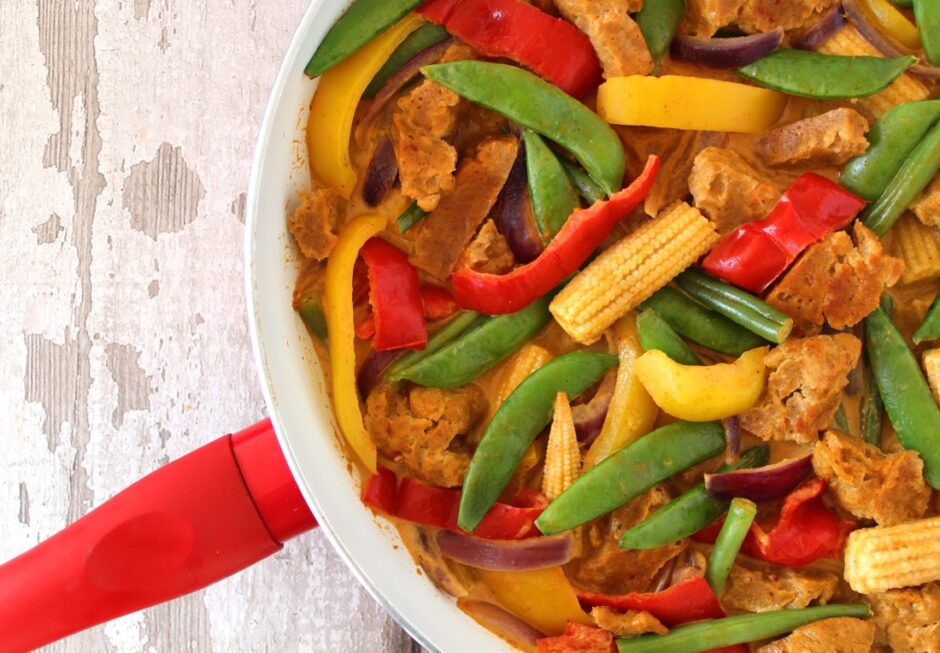
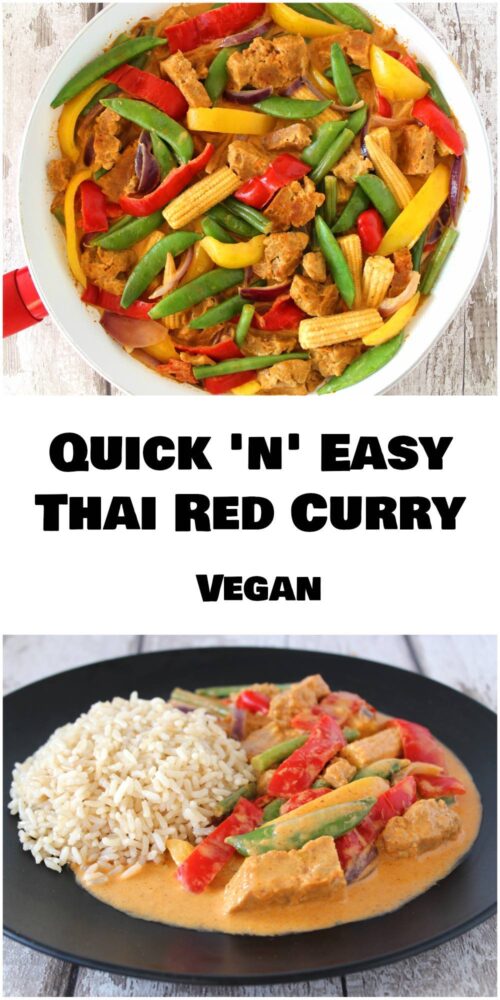
This Quick and Easy Vegan Thai Red Curry is packed with crisp, colourful vegetables and plant-based protein in a creamy, fragrant coconut sauce. Ready in just 25 minutes, it’s one of my family’s favourite easy weeknight meals!
I first shared this recipe back in December 2018, and it’s remained a family favourite ever since! Eight years on, it was high time I gave the blog post a little refresh, but the recipe itself has barely changed. I’ve made just one small tweak over the years, swapping the green beans for mushrooms, which add another lovely texture to the curry.
One of the great things about this curry is how adaptable it is. You can easily switch up the vegetables or protein to suit your tastes, or make use of whatever you have available.
To keep things simple, I use a shop-bought Thai red curry paste in this recipe. It saves having to buy lots of individual ingredients, such as lemongrass, galangal and kaffir lime leaves, and works out much cheaper too, particularly when you only need small quantities of each.
The Good Stuff
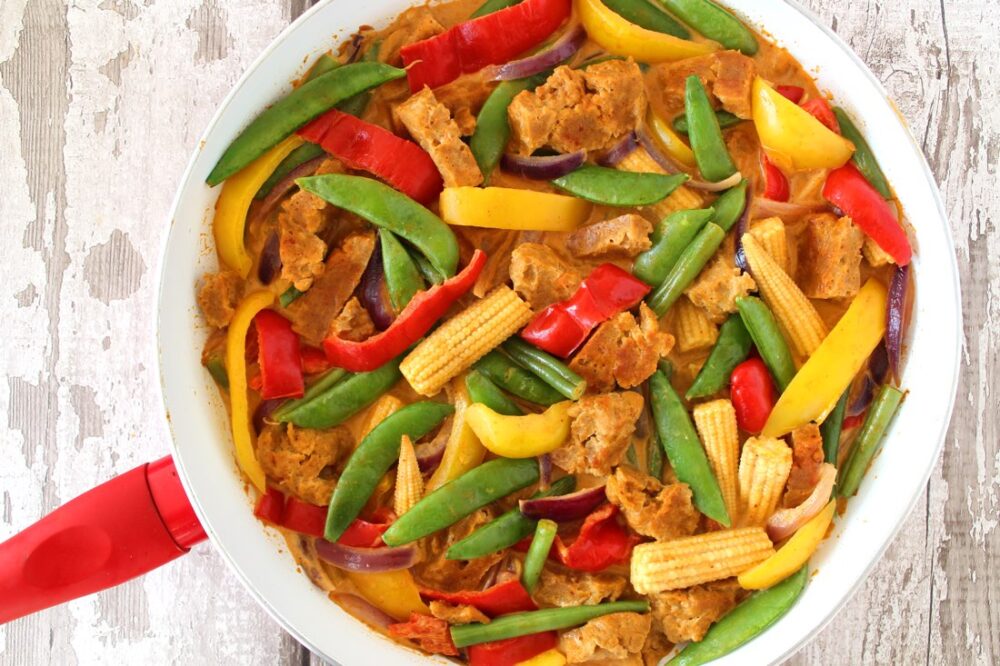
This curry is full of colourful vegetables, each bringing its own nutritional goodness to the dish.
✨ Red onion contains beneficial plant compounds, including quercetin, a type of antioxidant flavonoid.
✨ Garlic contains sulphur-containing compounds, including allicin, which have antioxidant and anti-inflammatory properties and have been studied for their potential heart-health benefits.
✨ Bell peppers and sugar snap peas are good sources of vitamin C, which contributes to normal immune function and helps protect cells from oxidative stress. Red bell peppers are especially rich in this vitamin.
✨ Mushrooms provide a good range of B vitamins, including riboflavin, niacin and pantothenic acid, as well as minerals such as selenium and copper. They also contain a variety of antioxidant compounds.
✨ Baby corn provides fibre and several B vitamins, including folate and vitamin B6, as well as minerals such as potassium.
Top Tips and FAQs
What is seitan and where can I buy it?
Seitan (pronounced say-tan) is a plant-based protein made from vital wheat gluten (the main protein found in wheat). It has a firm, chewy texture that makes it a great alternative to meat in dishes like curries, stir-fries, casseroles and kebabs.
My favourite seitan is home-made, and it’s surprisingly easy and cheap to make! You can find two of my recipes here:
For convenience, you can also buy ready-made seitan. Here in the UK, The Tofoo Co’s Original Seitan can be found in the plant-based chiller aisles of larger supermarkets, usually alongside the tofu.
Can I use something other than seitan?
Definitely! Extra-firm tofu makes a lovely alternative. Press it to remove excess moisture, cut it into cubes and pan-fry until golden before adding it to the curry. You could also use a shop-bought plant-based chicken alternative, following the cooking instructions on the packaging.
Can I use different vegetables?
Absolutely! You can use any quick-cooking or pre-cooked vegetables. Just aim for a colourful combination with a variety of textures. If you’re using frozen vegetables, such as broccoli or cauliflower, steam or microwave them first, then stir them into the curry towards the end of cooking to heat through. Avoid overcooking the vegetables so they retain their vibrant colours and a little crunch.
Where can I buy vegan-friendly Thai red curry paste?
Shop-bought Thai red curry paste is a brilliant shortcut for this recipe, but it’s important to check the ingredients, as many traditional curry pastes contain shrimp paste or fish sauce.
Some vegan-friendly options available in the UK include:
- Blue Dragon Thai Red Curry Paste – widely stocked in larger supermarkets, including Tesco, Sainsbury’s, Asda and Morrisons.
- Thai Taste Thai Red Curry Paste – available from Ocado and online retailers.
- Biona Organic Thai Red Curry Paste – available from health food shops and online retailers.
It’s always worth checking the packaging, as ingredients and formulations can change.
Can I make this curry gluten-free?
Absolutely! Simply replace the seitan with extra-firm tofu and use tamari instead of soy sauce. Check that your Thai red curry paste is also gluten-free, as ingredients can vary between brands.
What rice should I serve with this curry?
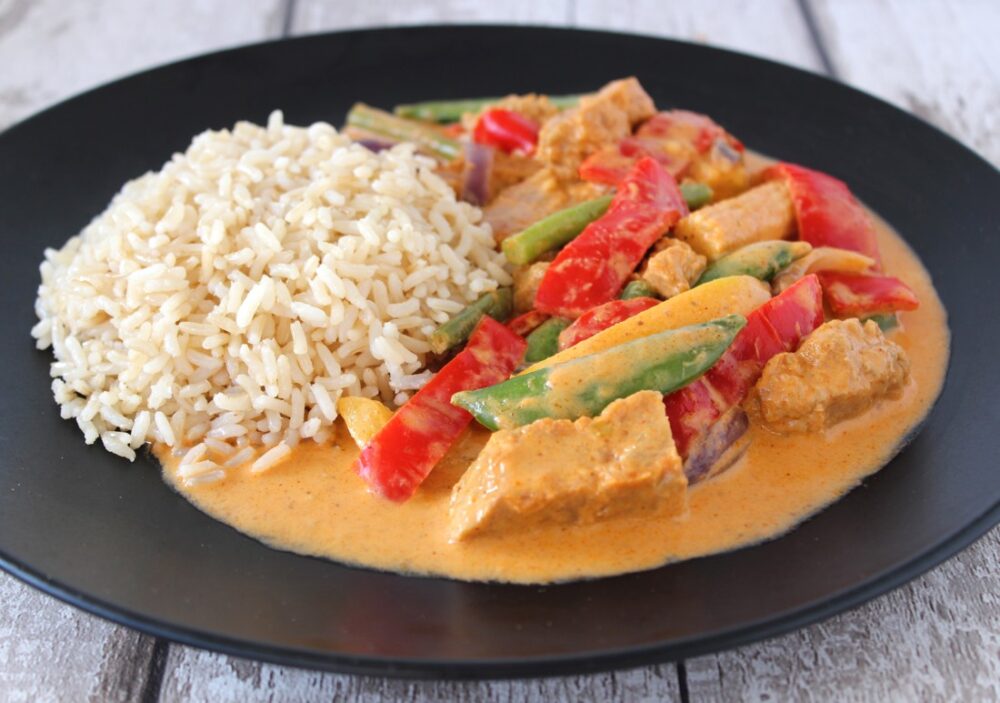
For convenience, I use microwave rice, which takes less than two minutes to heat through. My personal preference is brown rice because I love its nutty flavour and texture, but jasmine rice is also lovely and complements the Thai flavours.
Cooking for two? You can easily halve this recipe. If you only need half a can of coconut milk, give the can a good shake before opening, measure out what you need and freeze the remainder in a freezer-safe container. Coconut milk may separate slightly when defrosted, but a good stir or whisk will help bring it back together.
Recipe Card
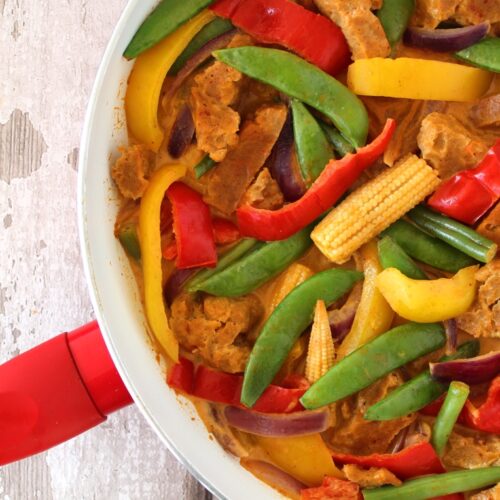
Quick and Easy Vegan Thai Red Curry
Ingredients
- 1 TBSP olive oil
- 350 g / 12 oz seitan, torn into chunks [see Notes for substitutions]
- 1 red onion, sliced
- 3 tsp minced garlic
- 2 small bell peppers, sliced (I use a mix of red and yellow)
- 200 g / 7 oz mushrooms, halved or quartered
- 3 TBSP vegan-friendly Thai red curry paste [see Notes]
- 400 g / 14 oz can full-fat coconut milk
- 1 TBSP low-sodium soy sauce
- 100 g / 3½ oz baby corn, snap larger ones in half
- 100 g / 3½ oz sugar snap peas
To serve:
- 500 g / 18 oz cooked rice [see Notes]
Instructions
- Heat the oil in a large, deep-sided frying pan (skillet). Add the seitan and pan-fry until golden brown. Transfer to a bowl and set aside.
- Add a little more oil to the pan if needed. Add the red onion and cook for 2–3 minutes until beginning to soften.
- Add the garlic, bell peppers and mushrooms. Stir-fry for a few minutes, until the mushrooms begin to brown.
- Return the seitan to the pan. Add the Thai red curry paste and stir well to coat everything. Cook for another minute to release the fragrant flavours.
- Pour in the coconut milk and soy sauce. Stir to combine and bring to a gentle simmer.
- Add the baby corn and sugar snap peas. Simmer gently for a few minutes, until the vegetables are heated through but still vibrant and crisp-tender.
- Taste and adjust the seasoning, adding a little more curry paste if desired. Serve with your choice of rice.
Notes
- Measurements: tsp = teaspoon; TBSP = tablespoon.
- Home-made seitan: Try my Basic Home-Made Seitan or Easy Home-Made Seitan ‘Chicken’.
- Seitan substitutions: Extra-firm tofu (plain or smoked) makes a lovely alternative. I’d recommend increasing the quantity to 400g (14 oz), as tofu contains less protein than seitan. You could also use a shop-bought plant-based chicken alternative.
- Gluten-free: Replace the seitan with extra-firm tofu and use tamari instead of soy sauce. Check that your curry paste is also gluten-free.
- Thai red curry paste: As curry pastes vary in heat and intensity, I recommend starting with 3 TBSP and adding more to taste (see the Top Tips & FAQs for UK-based vegan curry paste options).
- Vegetables: Feel free to use your favourite combination of quick-cooking or pre-cooked vegetables. Avoid overcooking so they retain their colour and a little crunch.
- Rice: I use microwave rice for speed and convenience.
- Storage: Allow the curry to cool, then transfer to an airtight container and refrigerate for up to 48 hours.
Nutritional Breakdown
Please note: The nutritional values are estimates and are provided for illustration purposes only. Actual values will vary depending on the specific ingredients and brands used. The % Reference Intake (RI) will also vary according to individual factors, including age, gender, height, weight and activity level.
Pin for Later ↓
If you make this Quick and Easy Vegan Thai Red Curry, I’d love to hear your feedback and any suggestions for adaptations!
If you’re based outside the UK, I’d especially love to hear which vegan-friendly Thai red curry pastes you recommend in your country. It’s always a joy to discover new brands!
You can leave a comment below, or connect with me over on Instagram, Facebook and Pinterest.
Please tag your photos with @goodstuffsharon on Instagram. I absolutely love seeing your creations! ❤️
With love,
Sharon xx