Introduction
When it came to preparing for the Tour du Mont Blanc, I loved the planning stage – researching gear, reading reviews, and finding vegan-friendly options for everything from boots to snacks. (If you’re still at the planning stage yourself, you might enjoy my Top Tips for Hiking the Tour du Mont Blanc (TMB) as a Vegan post – it’s where I share everything that helped us get ready for the adventure!)
Some items took a bit of detective work – vegan hiking boots and socks were a challenge! But the effort was worth it. Here’s what we packed and loved for our TMB – all vegan-friendly and tested on the trail.
Contents
- Vegan-Friendly Hiking Boots
- Hiking Socks (Merino-Free)
- Waterproof Jackets and Trousers
- Insulated Jackets (Down-Free)
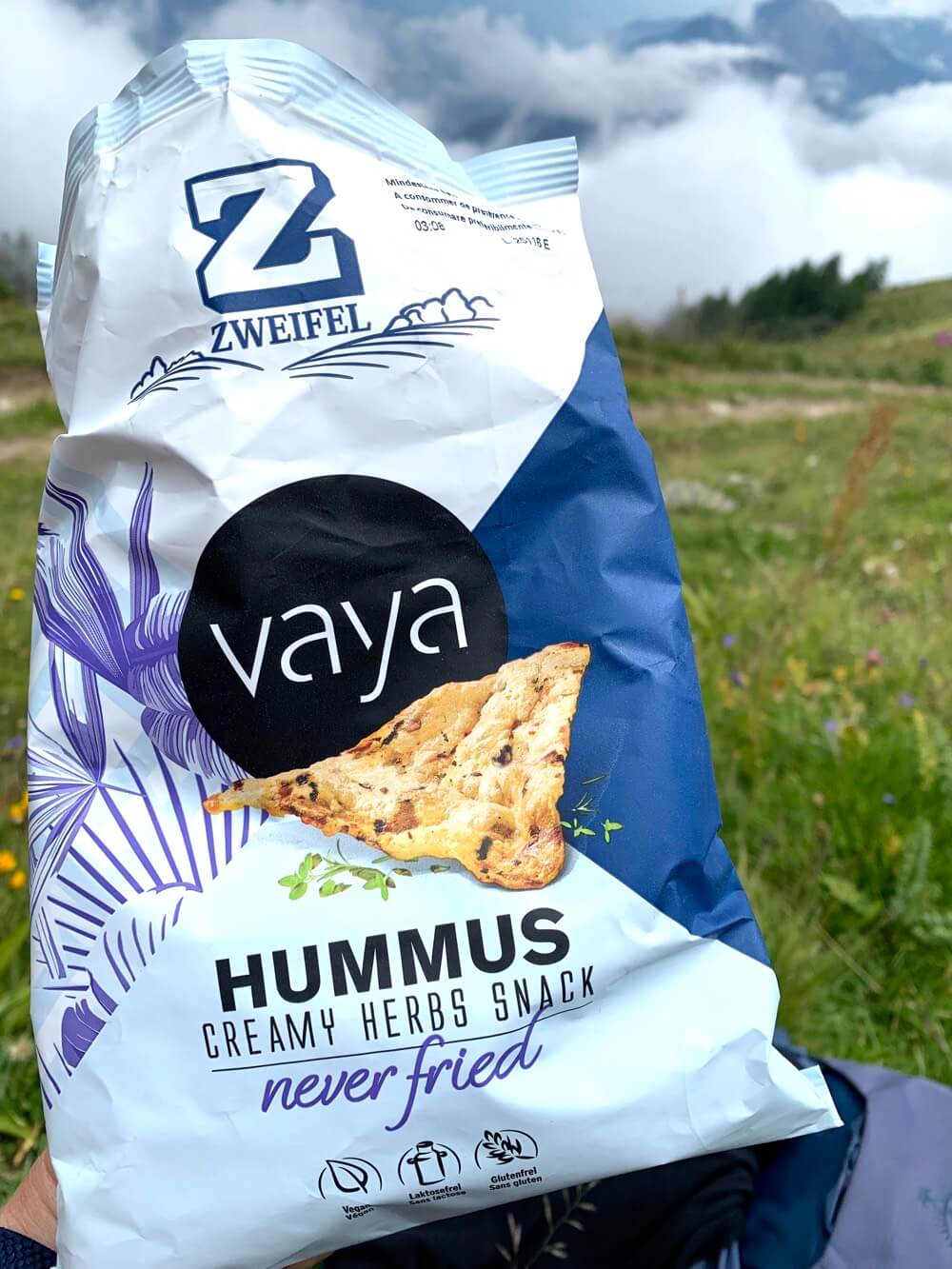
- Vegan Food and Snacks
- Backpacks
- Final Thoughts
Pin for Later ↓
Vegan-Friendly Hiking Boots
Finding comfortable, durable, vegan hiking boots can be tricky, especially if you have wide feet like me!
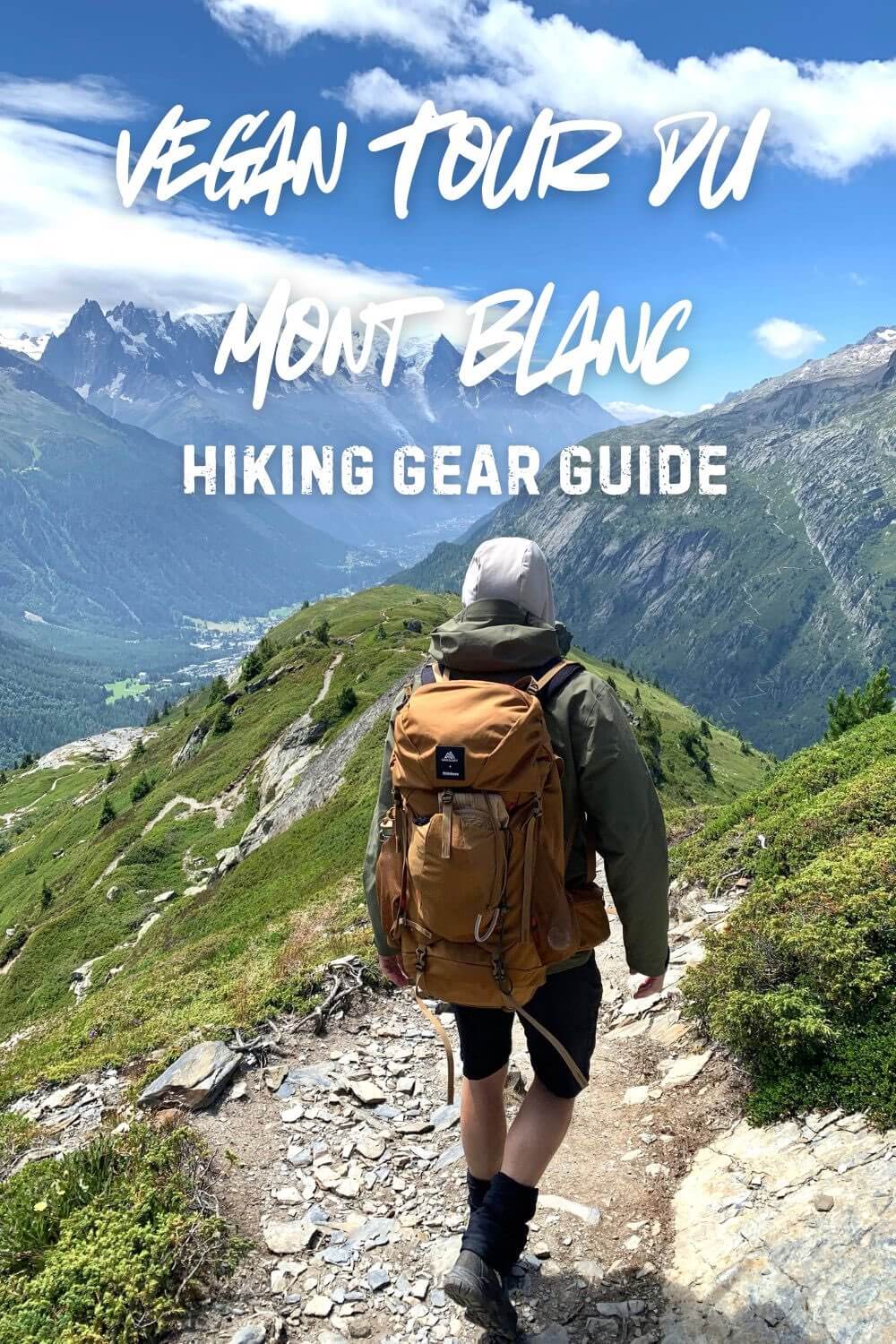
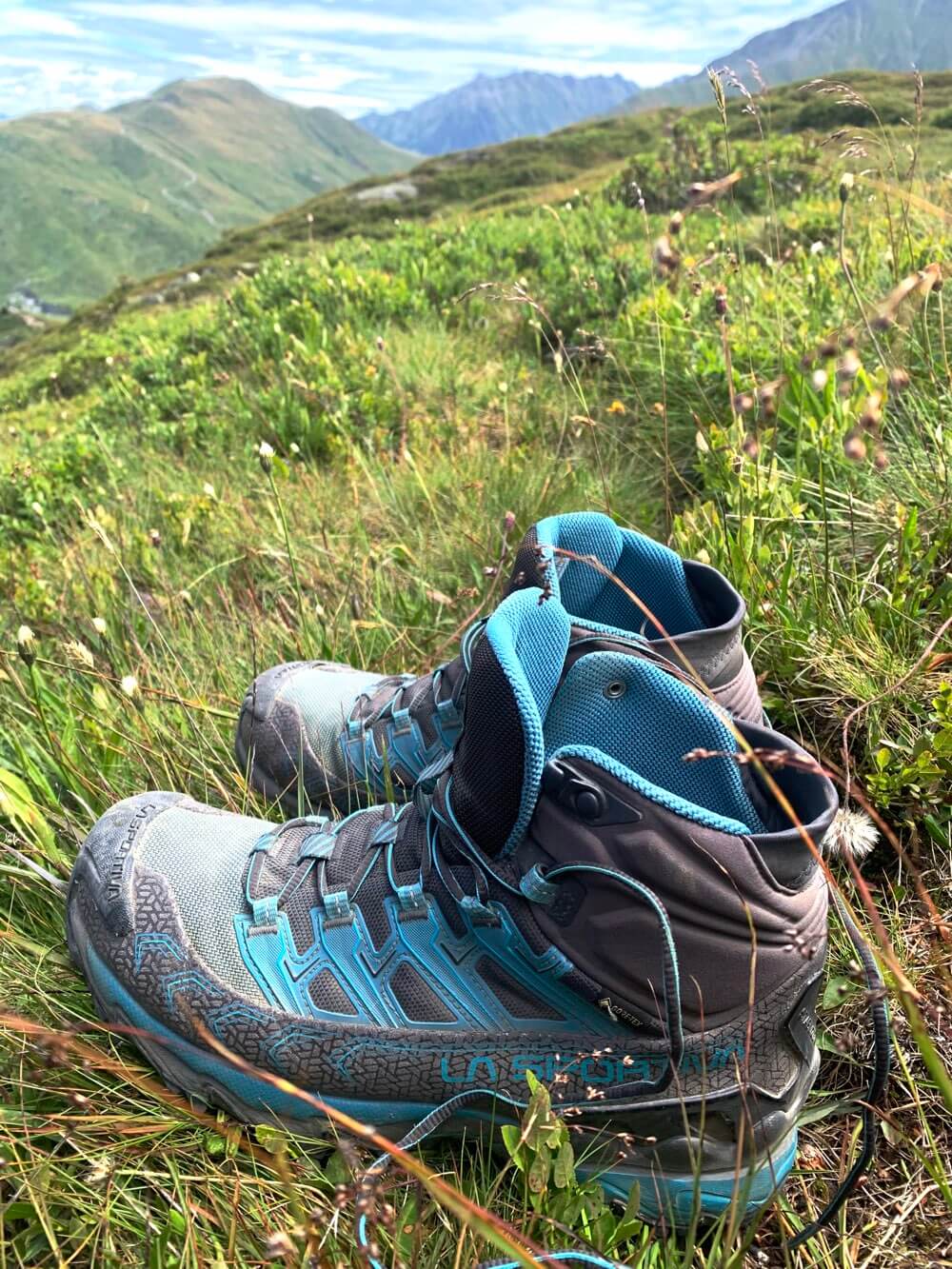
After a lot of research, I finally found the La Sportiva Women’s Ultra Raptor II Mid Gore-Tex (Wide Fit) – perfect for the TMB. Super lightweight, incredibly comfortable (no breaking-in needed!), and with excellent grip for mixed terrain. The only downside was that they did leak a little in heavy rain, but I’d discovered this on UK hikes beforehand, so I came prepared with waterproof socks.
Mark opted for the SCARPA Rush TRK LT GTX, also vegan-friendly (you can filter by “vegan friendly” on the SCARPA UK website which is so helpful!) His boots were stiffer and heavier and needed a few weeks of breaking in, but after that they were really comfortable.
Neither Mark nor I got a single blister on the entire TMB hike! We were extremely happy with our boot selection.
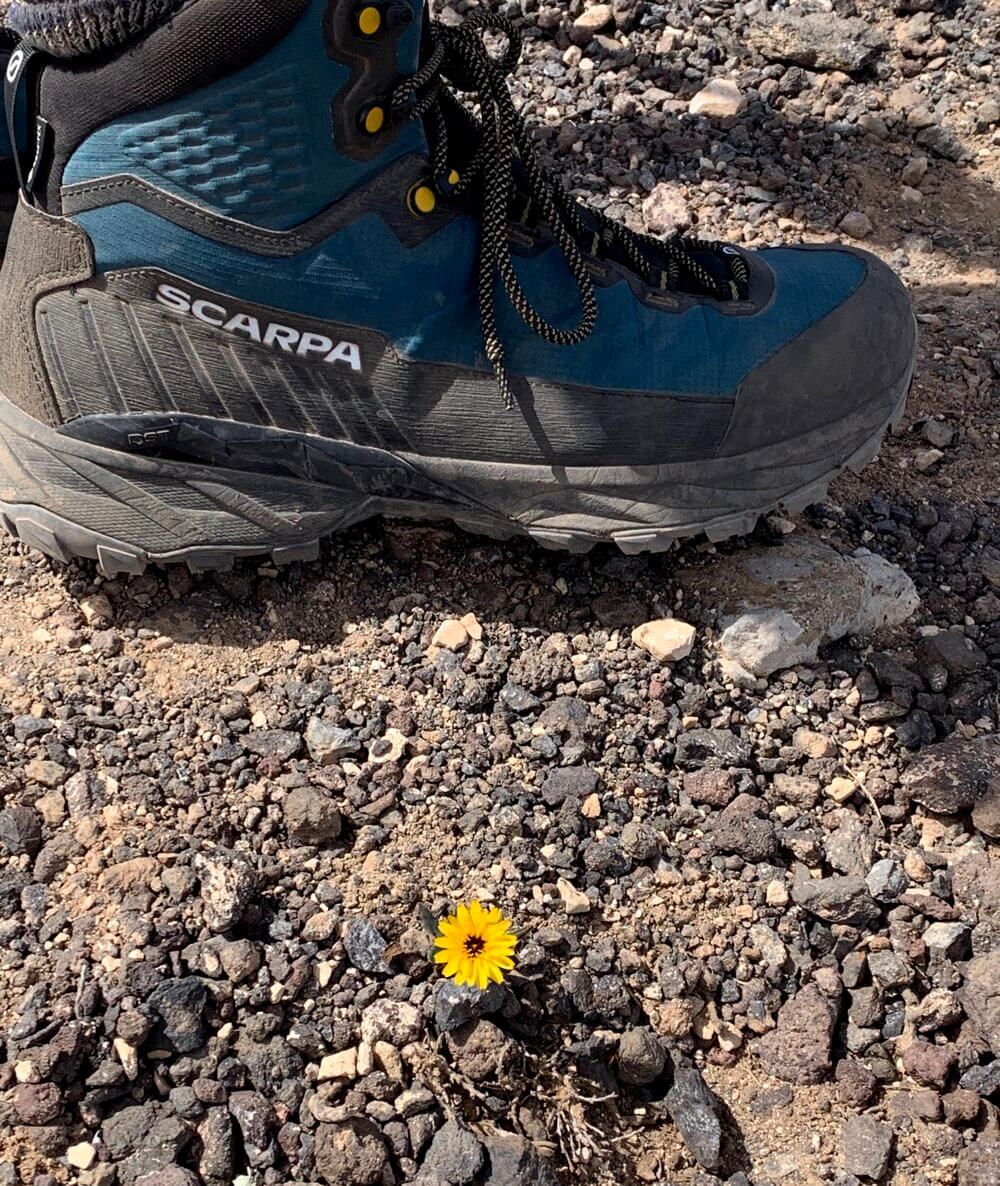
👉 Tip: Even boots marketed as “waterproof” sometimes leak in alpine conditions – packing waterproof socks is a wise backup!
Hiking Socks (Merino-Free)
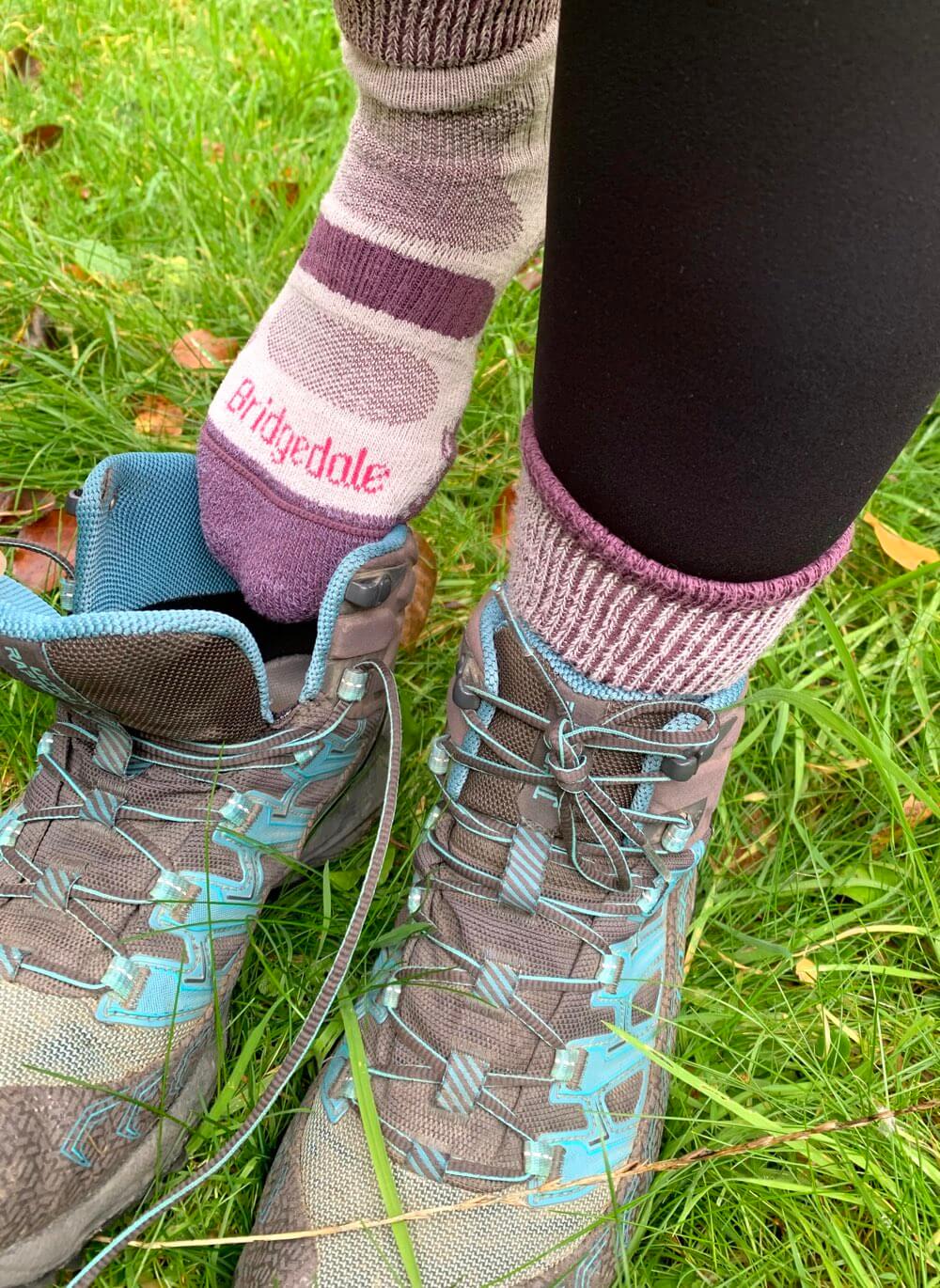
Finding vegan-friendly hiking socks was another small adventure, as many contain merino wool. We both chose the Bridgedale Coolmax Light Hiker Socks, which were soft, breathable, and have great cushioning.
We each packed a couple of pairs of these, plus one pair of Bridgedale Ultralight Coolmax Hiker Socks for hot days (thinner and lighter, but with less cushioning).
Since my hiking boots can leak a little in heavy rain, I brought a pair of Sealskinz Wiveton Waterproof Socks with me (these have a bamboo inner, rather than merino). I was so thankful to have these – they kept my feet completely dry and comfortable on rainy days.
I also packed a small roll of kitchen towel from home to help dry my boots if they did leak – it only happened a couple of times, but I was glad to have it.
Waterproof Jackets and Trousers (Fluorocarbon-free)
Good waterproofs are essential for hiking in the Alps!
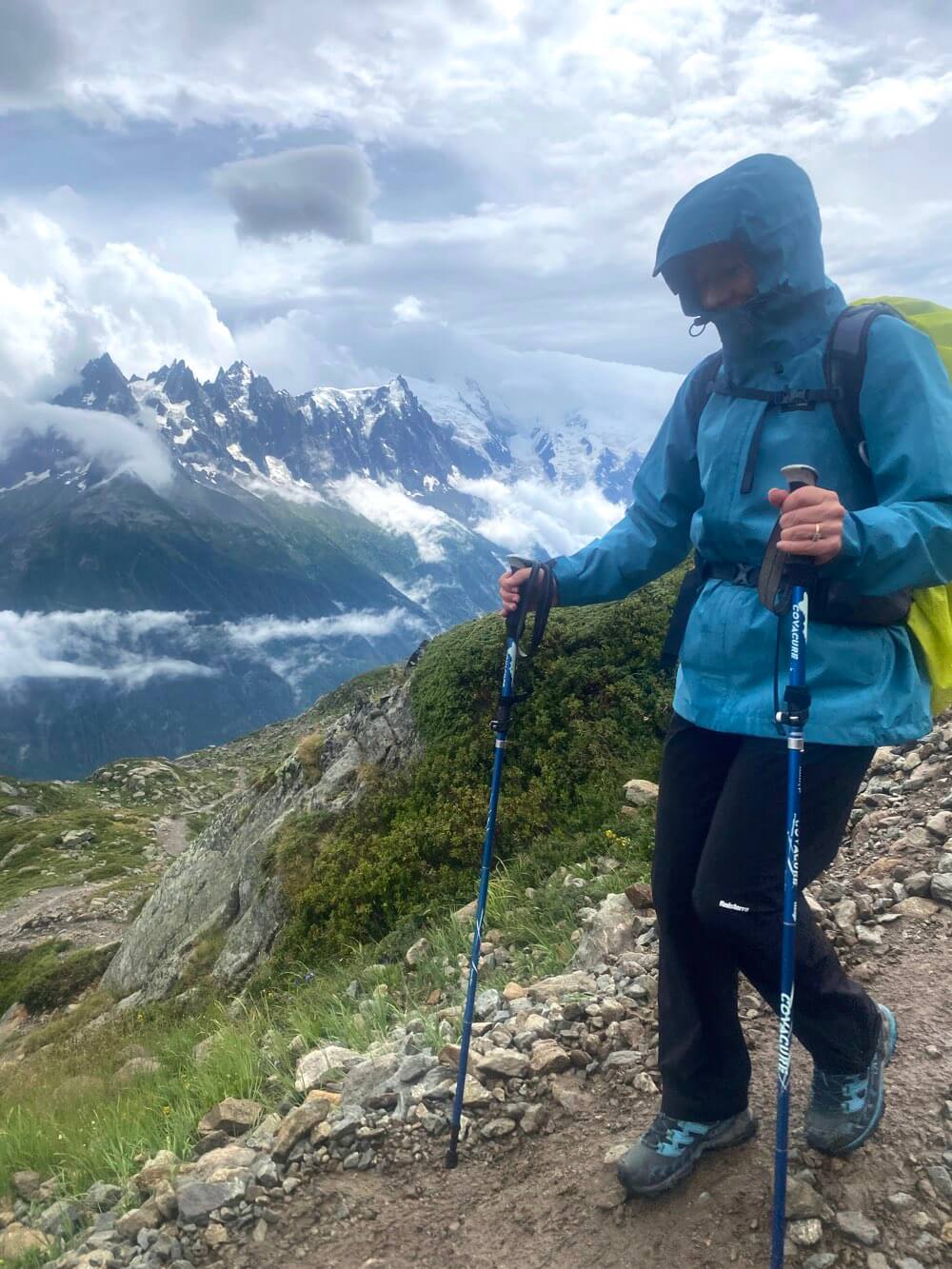
I wore the Finisterre Skybird Jacket, and Mark had the Finisterre Stormbird. Both are made from recycled materials with a fluorocarbon-free, durable waterproof repellent (DWR) coating, and both performed brilliantly.
- Stormbird – 20,000mm waterproof rating, more robust but heavier (Mark’s pick)
- Skybird – 12,000mm waterproof rating, lighter weight (my pick)
We started the TMB in heavy rain so we put our wet weather kit to use immediately!
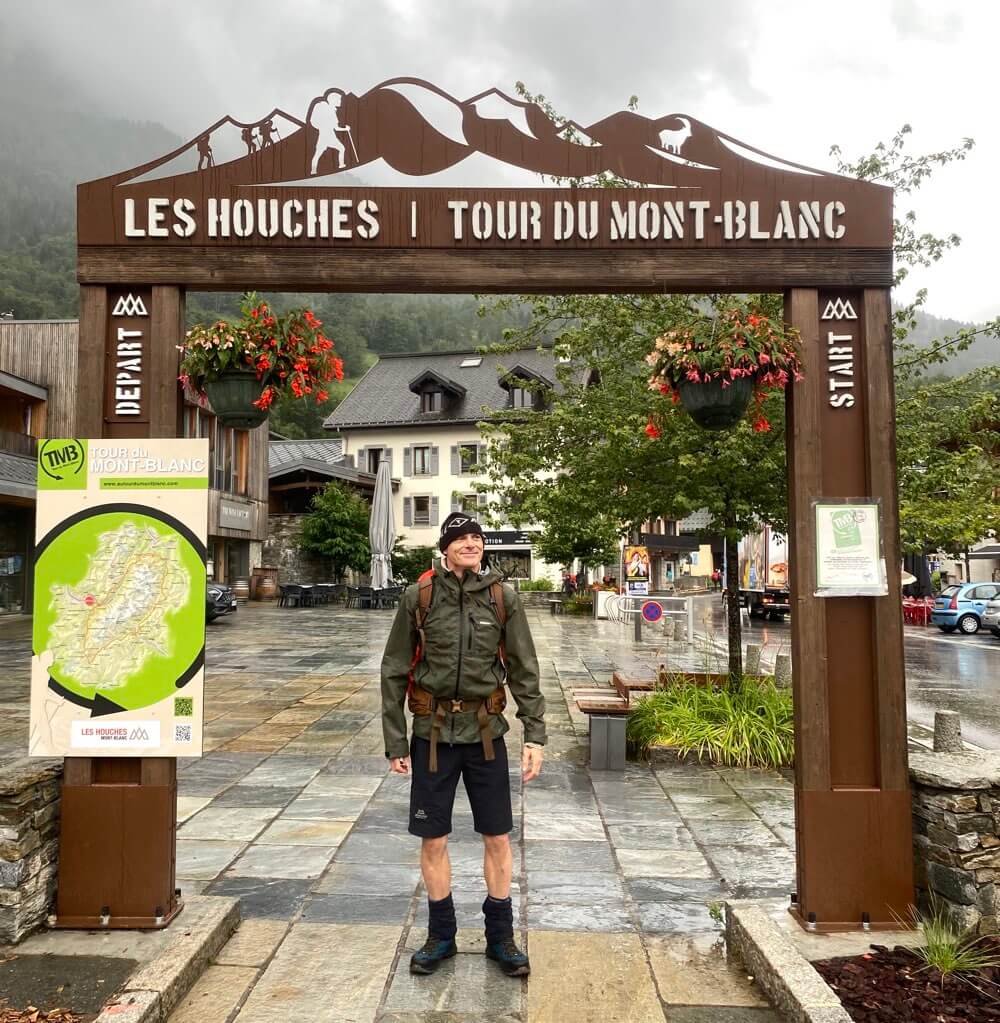
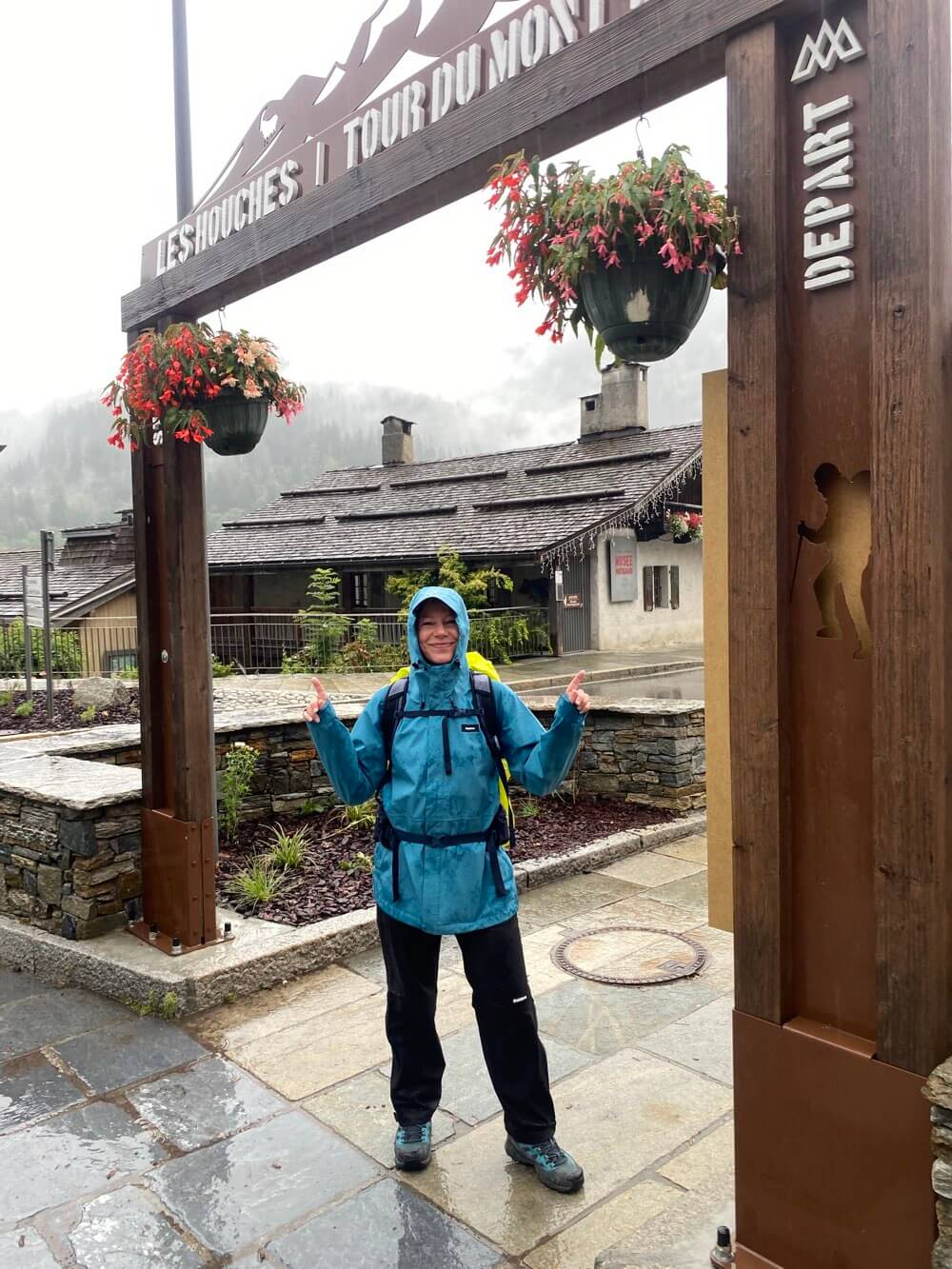
We rolled and packed our jackets into their hoods, so they took up minimal space in our backpacks. On one stage, we went from bright sun to a torrential downpour in minutes – those jackets saved us!
I also packed the Finisterre Rainbird Waterproof Trousers (10,000mm rating), made from recycled materials with a fluorocarbon-free DWR coating. They’re super light-weight and fold down tiny into the back pocket, taking up almost no space in my packback. Worn over leggings, they were incredibly comfortable and never felt bulky. I was so glad to have them on the wet days – while Mark braved the rain in shorts and quickly regretted it when the temperature dropped!
Insulated Jackets (Down-Free)
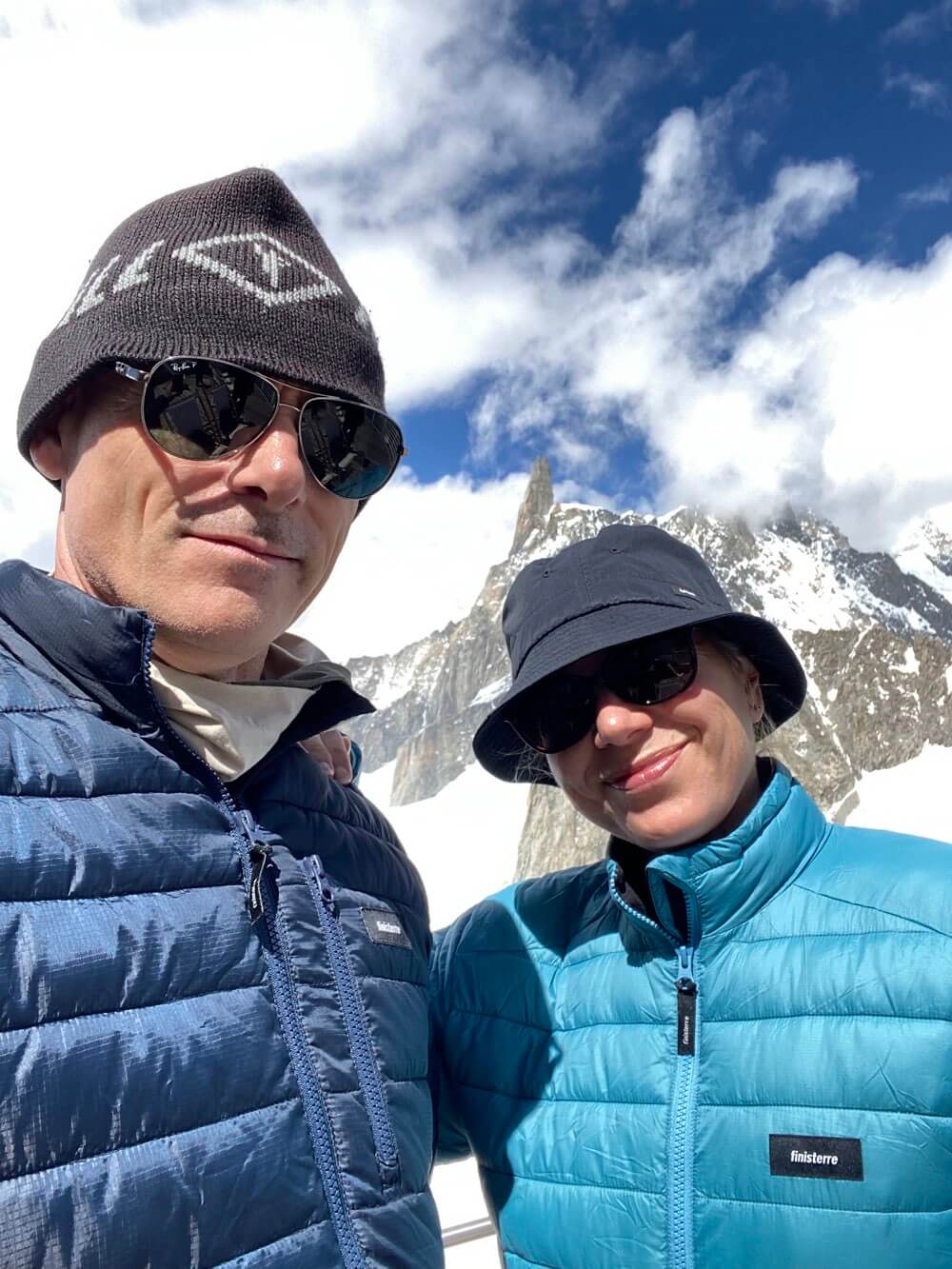
Many insulated jackets use down (goose or duck feathers), which isn’t vegan-friendly, so we both invested in Finisterre Nimbus Jackets – one of our best gear decisions.
These jackets are insulated with Finisterre’s own recycled synthetic fill (a down alternative made from post-consumer waste) and have a shell of 100% recycled polyester with a fluorocarbon-free DWR. Lightweight and packable into their own inside pockets, these jackets were warm and cosy on cold summits and rainy afternoons – we were so glad we brought them!
Vegan Food and Snacks
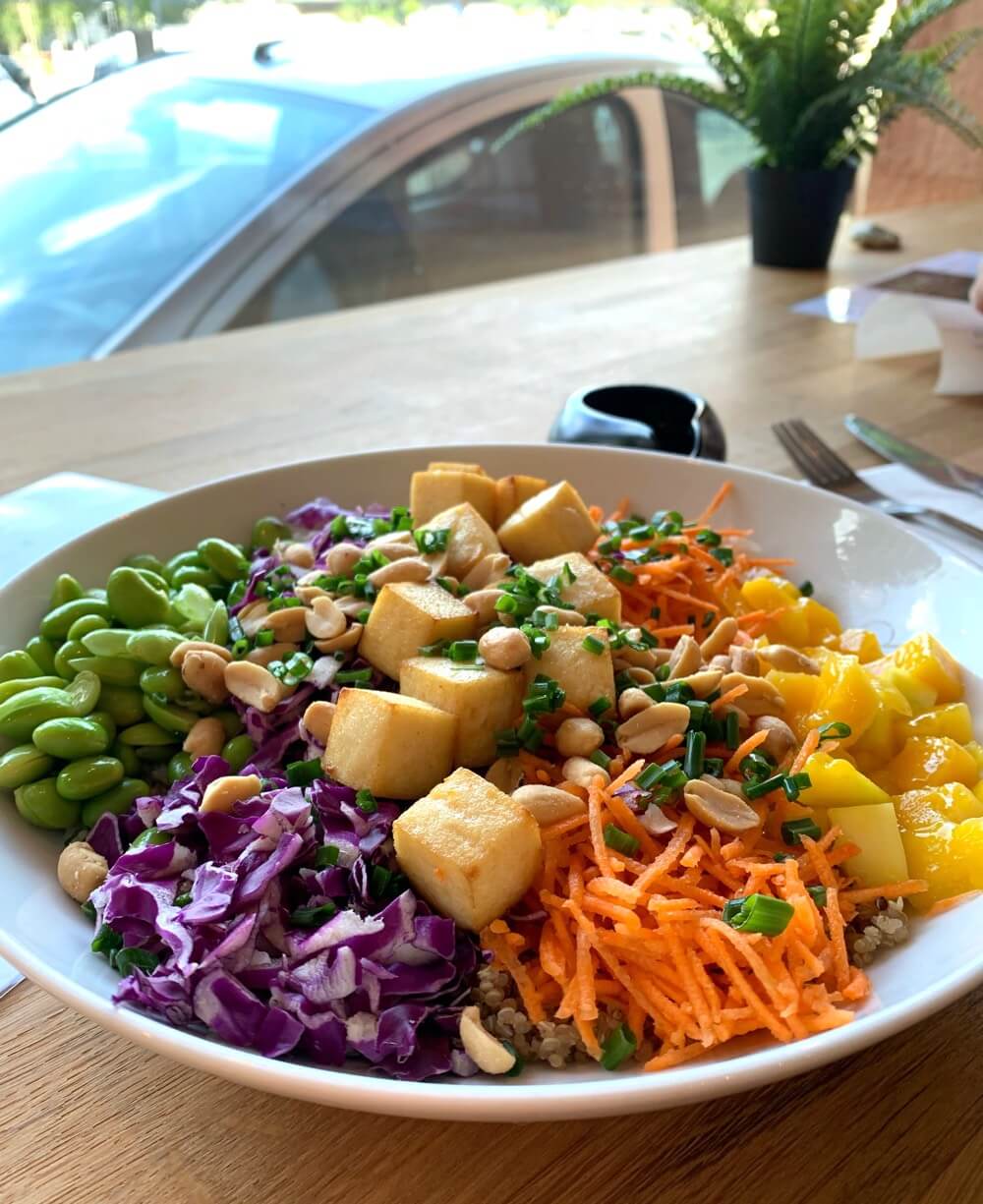
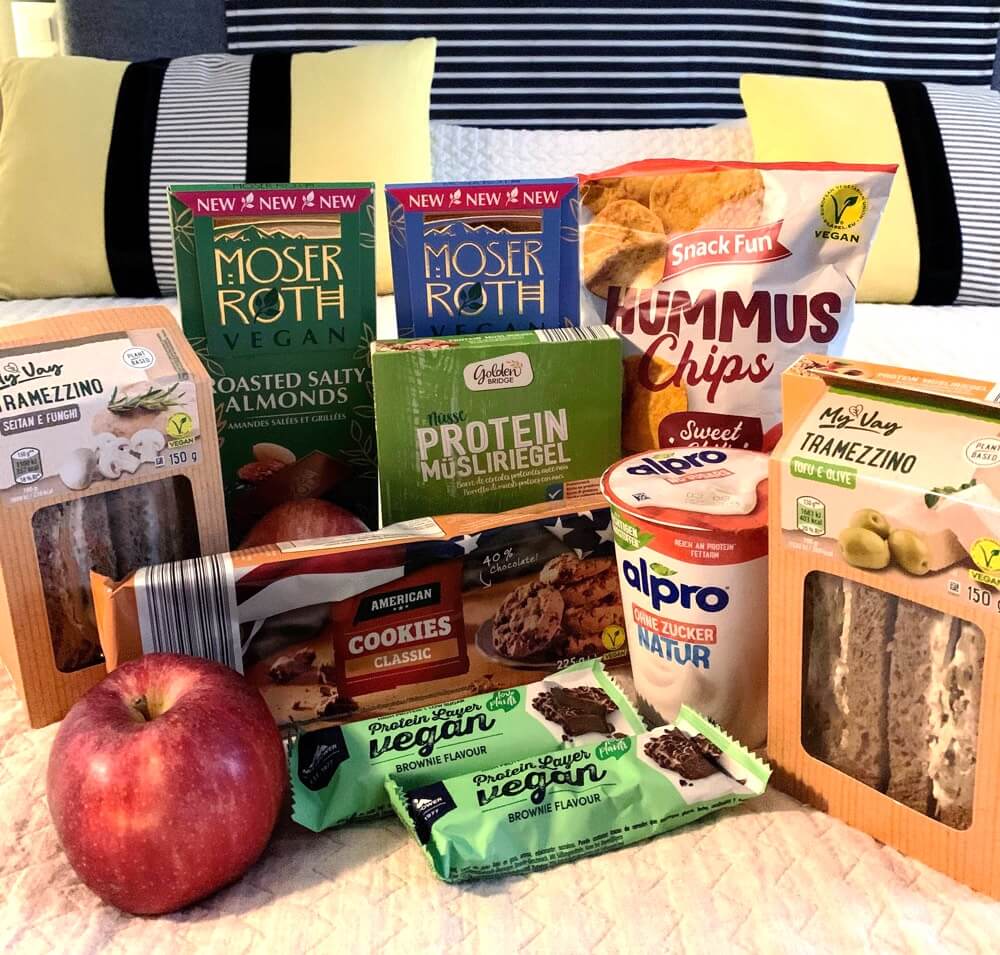
I have a dedicated Vegan TMB Food Diary post for full details of what we ate as vegans on the TMB, stage by stage, but here’s a quick summary of what we brought with us from the UK – plus a couple of things I wish we’d brought!
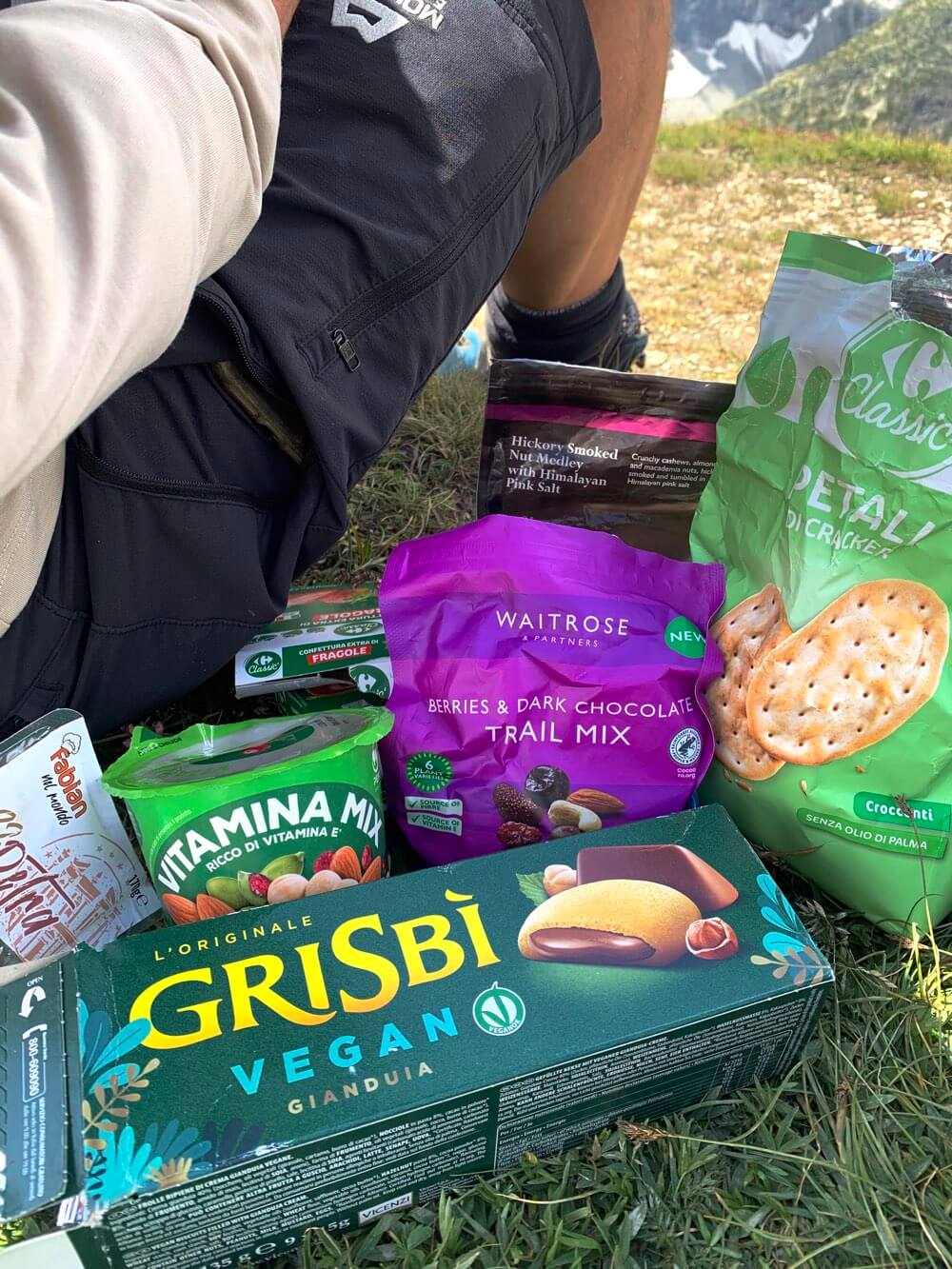
- Trail mixes (nuts, seeds, dried fruit, and dark chocolate) I loved the Waitrose Berries & Dark Chocolate and Apricot & Ginger Trail Mixes – both made a welcome change from the usual plain nut-and-fruit blends.
- Mixed nuts – I took two packets of Waitrose Hickory Smoked Nuts, which were such a treat, and made a nice change to the usual plain or roasted nut mixes.
- Vegan protein bars – We packed a mix of Trek Protein Flapjacks, and Nakd Protein Bars. These were perfect for mid-morning or late-afternoon energy top-ups.
- Vegan chocolate and flapjacks – We took the Rhythm 108 Roasted Almond Butter Bars, Graze Oat Boosts and Pip and Nut Peanut Butter Stuffed Oat Bars as treats.
- Vegan meal bars – I wish we’d brought some vegan meal bars with us, as they would’ve been so handy for the more remote stages. Next time, I’ll pack some Real Meal Bars – they’re fully vegan, contain around 26g of protein, and are designed to replace a full meal.
- Dehydrated vegan meals – we took four Firepot vegan meals as emergency backups (these can be especially handy if you’re camping or staying at refuges, where breakfast and lunch options can be limited). We didn’t end up needing them, but it was reassuring to have them just in case.
- Reusable utensils – we each took a spork, though I wish we’d also brought a knife for spreading jam or hummus on bread!
- Eco-friendly lunch packaging – we packed two small reusable lunchboxes and clip seals for closing packets.
These simple additions made a huge difference to our experience of the TMB – especially for the stages when vegan options were scarce.

Backpacks
Alongside your footwear, clothing and food, getting the right backpack setup makes a huge difference on the trail. Since we booked our trip with Mac’s Adventures, our main luggage was transferred daily – so we only needed to carry day backpacks.
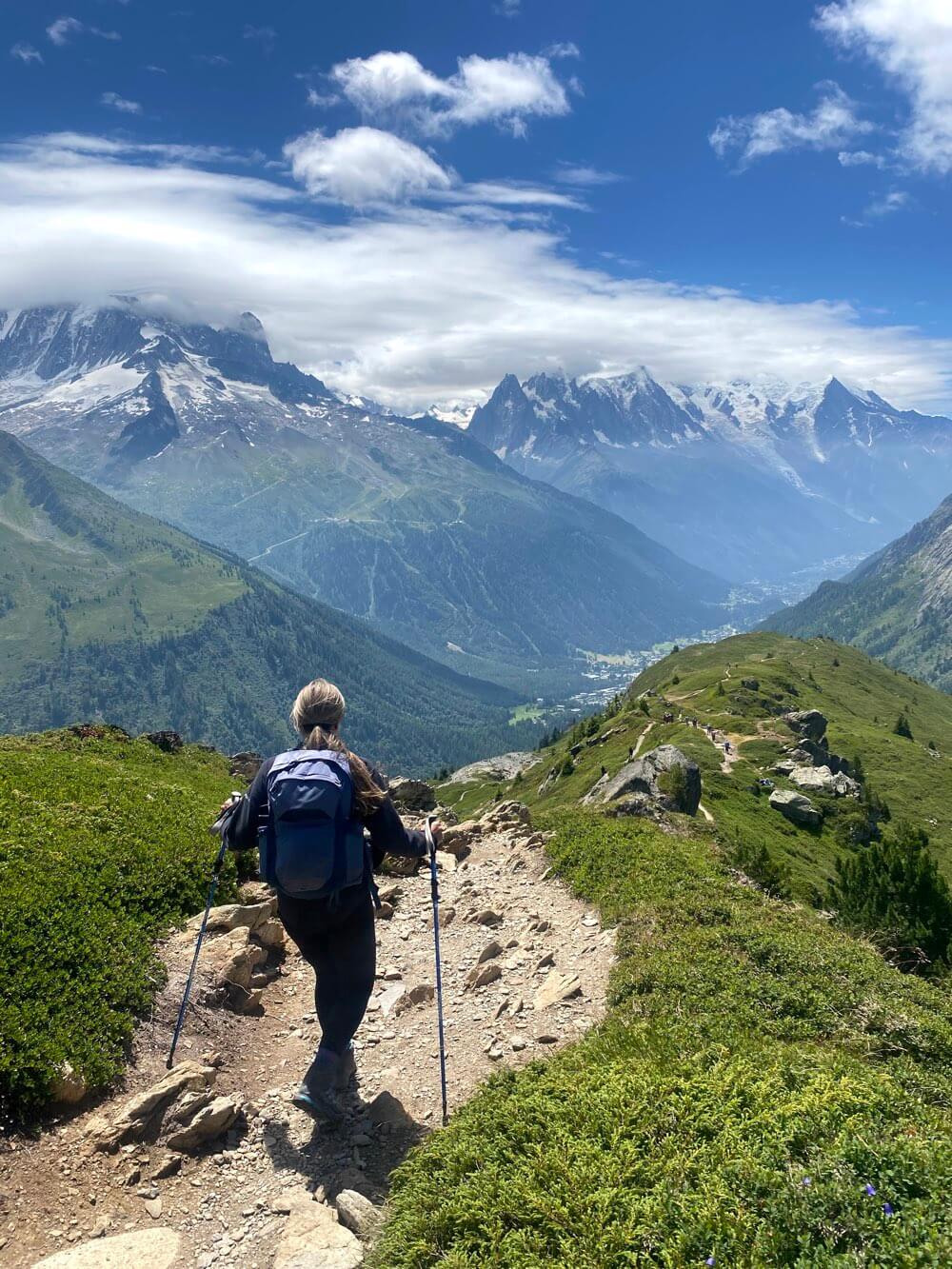
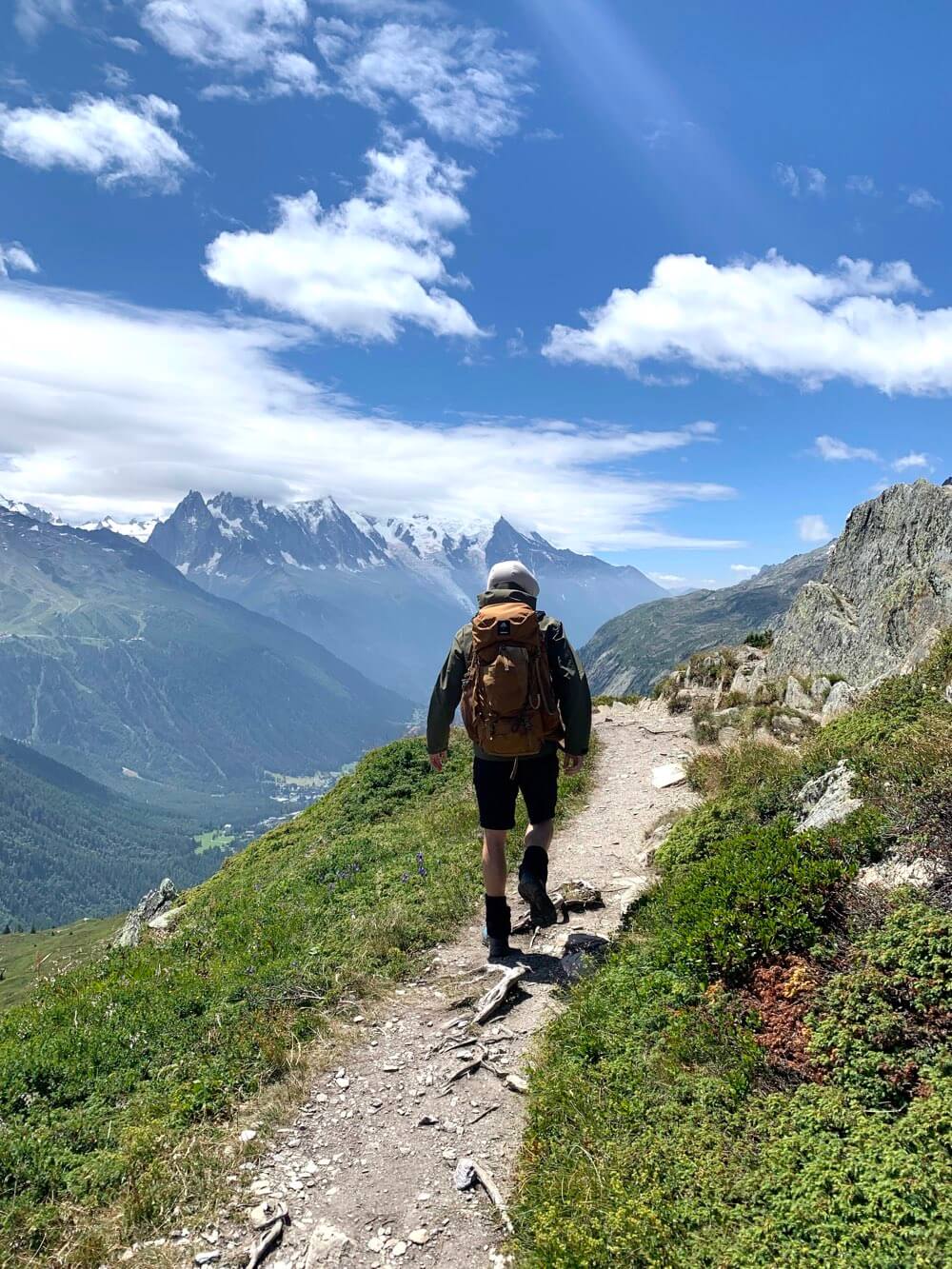
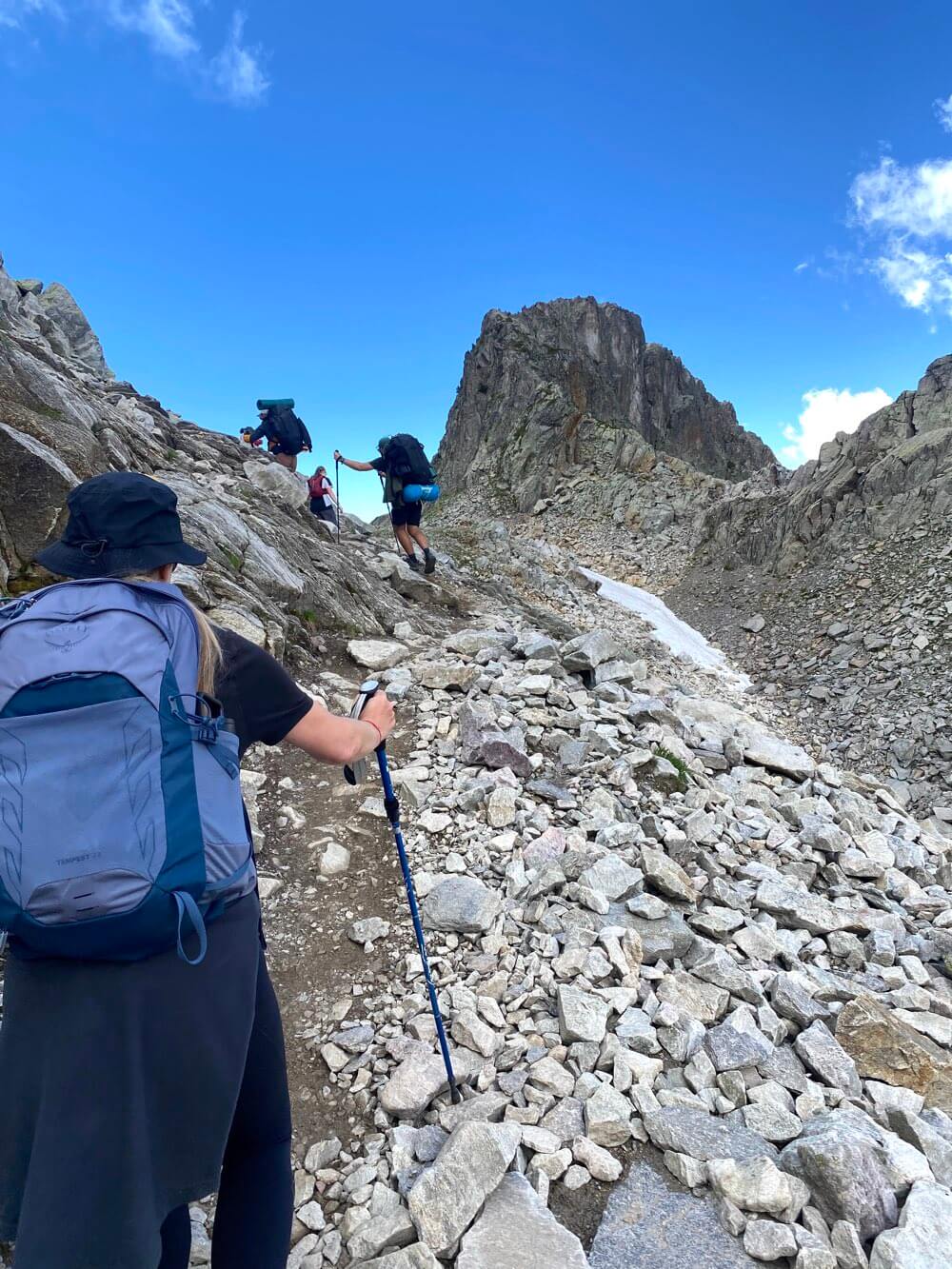
I did a lot of research before purchasing my backpack, and opted for the Osprey Women’s Tempest 22L which is specifically designed for the female body shape. One I’d taken the time to adjust all the straps correctly, it was so comfy – I barely noticed I had it on! The Tempest range is made from 100% recycled, bluesign®-approved nylon and is fluorocarbon-free.
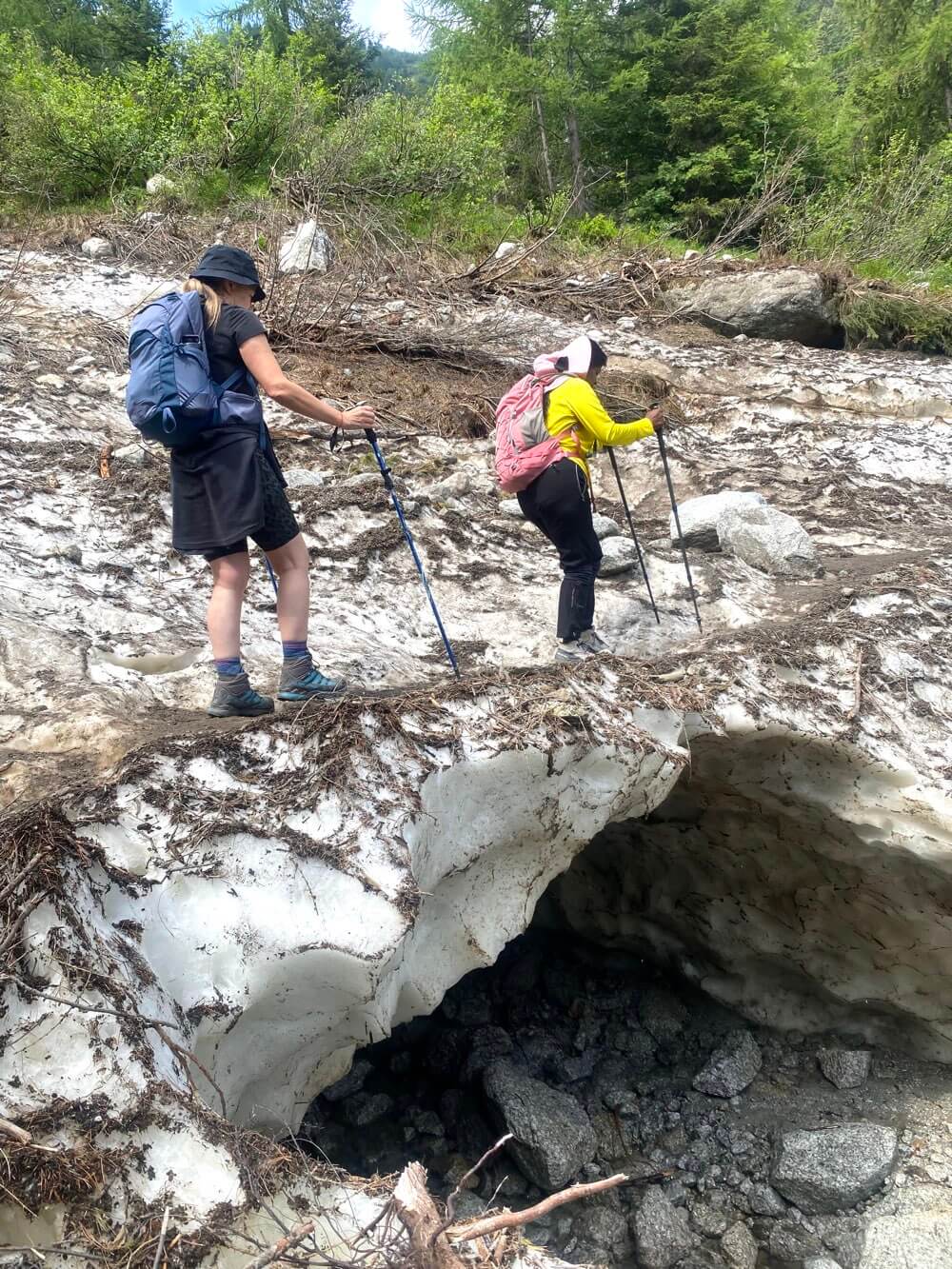
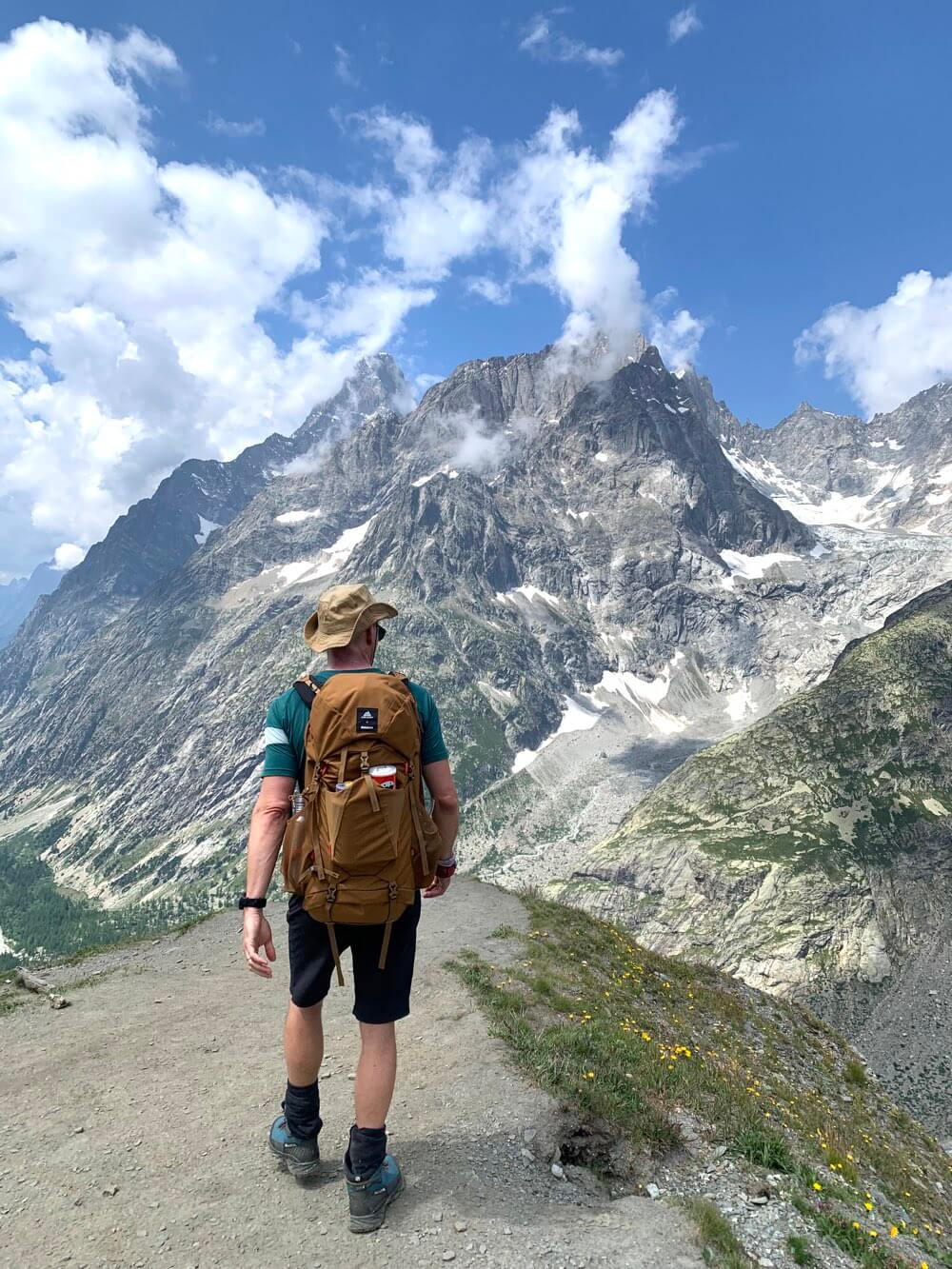
Mark opted for the Finisterre + Gregory Men’s Stout 45L Backpack – a bit larger than your usual day pack, but ideal for us as Mark had kindly offered to carry all our food. The pack is made of sturdy, recycled materials, a fluorocarbon-free DWR coating and came with a lifetime warranty. Like me, Mark spent a good amount of time adjusting all the straps on the backpack so that it fit him perfectly. (There are some handy YouTube videos that show you how to do this). Adjusting the straps makes all the difference between a comfy and uncomfortable pack, so it’s definitely worth spending time getting the fit just right!
Waterproof Liners and Rain Covers
We used waterproof liners inside our backpacks to ensure our gear kept dry. We both chose the Exped 22L Dry Bag, which is lightweight, made from recycled materials and Bluesign ® approved.
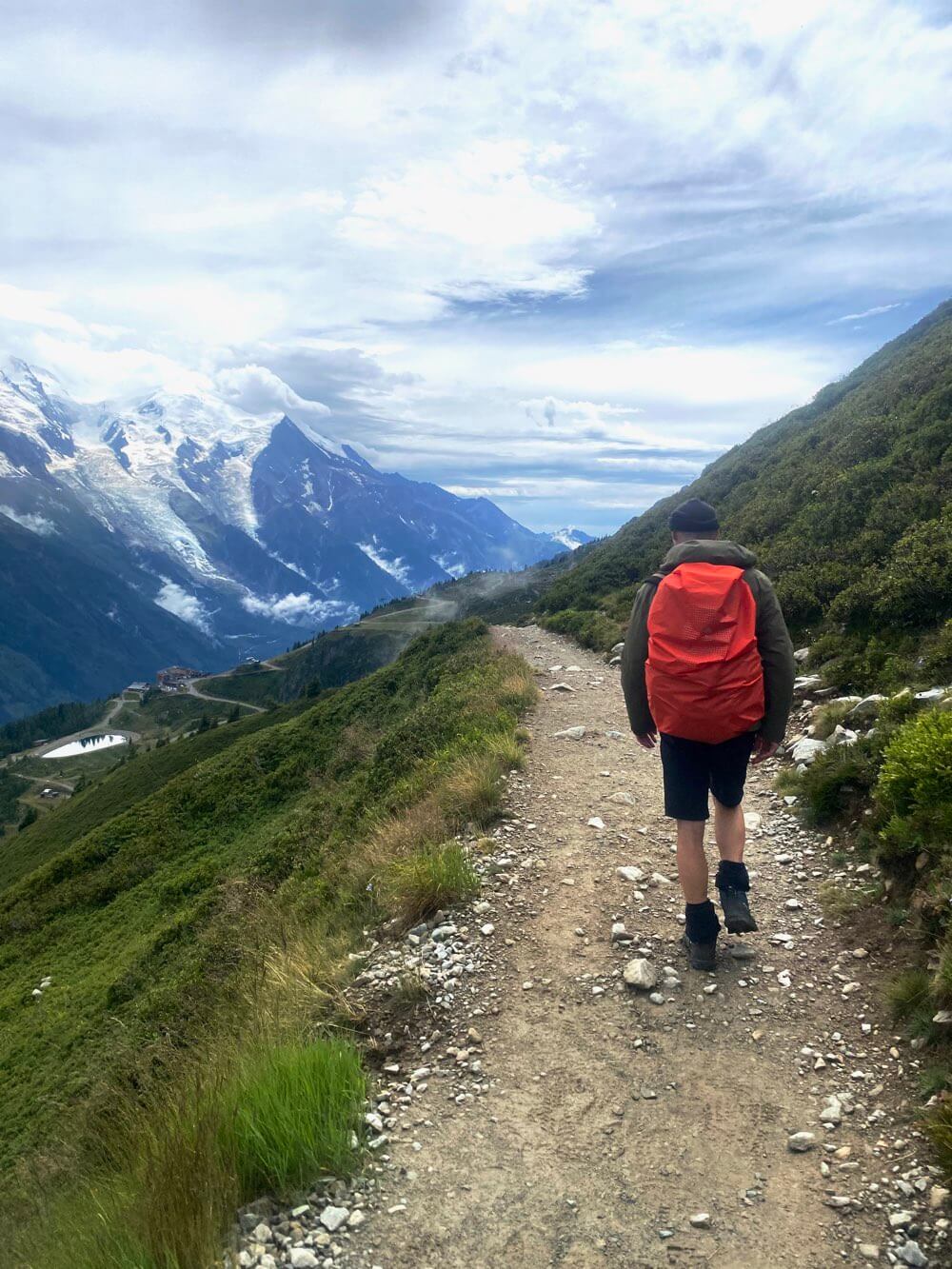
We also each had rain covers for our packs. Mark’s backpack came with a rain cover; mine didn’t, so I purchased the Osprey Ultralight High-Vis Raincover (Small) – recycled, bluesign®-approved, fluorocarbon-free DWR. Having tested my backpack on Mount Snowdon in the UK and discovered it leaked badly in the rain, I was so grateful for the rain cover on the TMB!
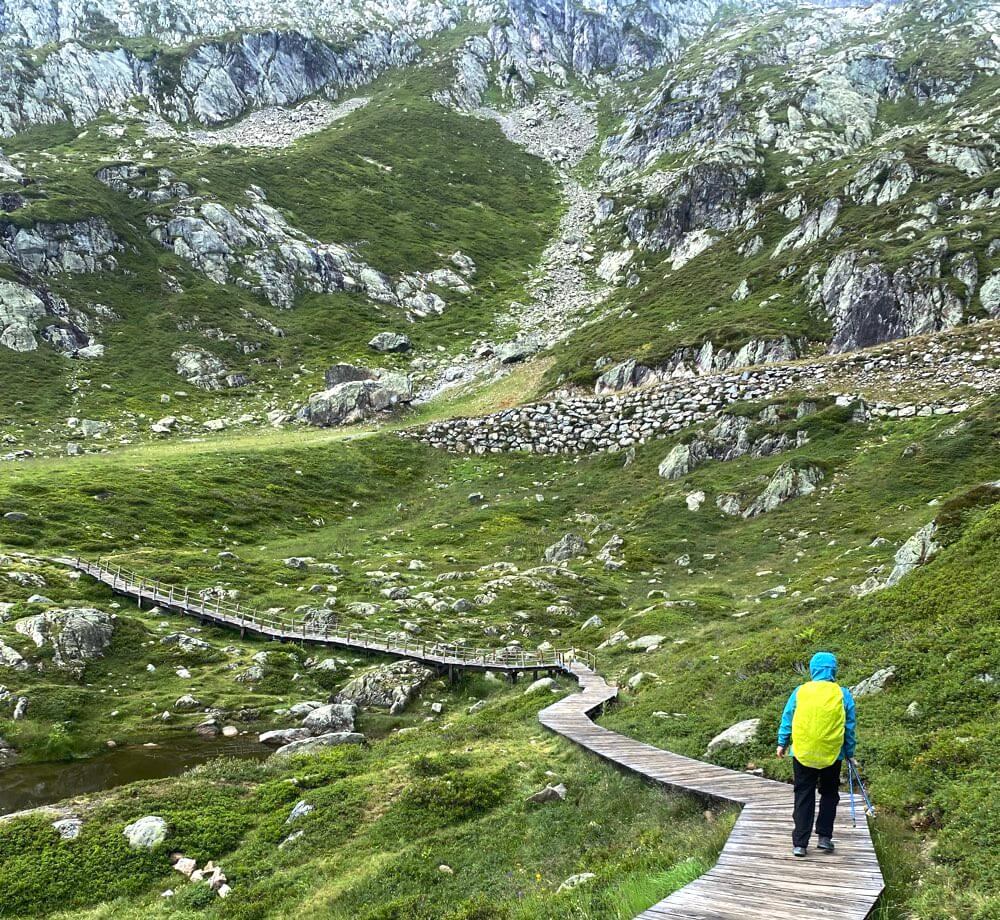
Here’s what I carried in my daypack each day:
- 2 bottles of water
- Insulated jacket (packs into its pocket)
- Waterproof jacket
- Waterproof trousers
- Waterproof socks
- Change of t-shirt
- Lightweight fleece
- Wet wipes, toilet paper + small bag for used wipes/paper
- Sunglasses, suncream, lip balm, sun hat
- Walking poles
- Phone + waterproof pouch
- Waterproof backpack liner & cover
Mark packed similarly, plus our lunch, snacks, maps, guide book, compass, first-aid kit, and power bank.
We used everything we took with us – apart from the first-aid kit, which we were very happy not to need!
Final Thoughts
The key to happy vegan hiking is comfort, preparedness, and compassion – for all living beings, including yourself! ❤️
Whether you’re gearing up for the Tour du Mont Blanc or another long-distance trek, I hope this guide inspires you to find the sweet balance of practicality, ethics, and joy in every step.
Have you already hiked the TMB as a vegan? I’d love to hear your top tips and favourite vegan hiking essentials – please share them in the comments below!
With love,
Sharon xx